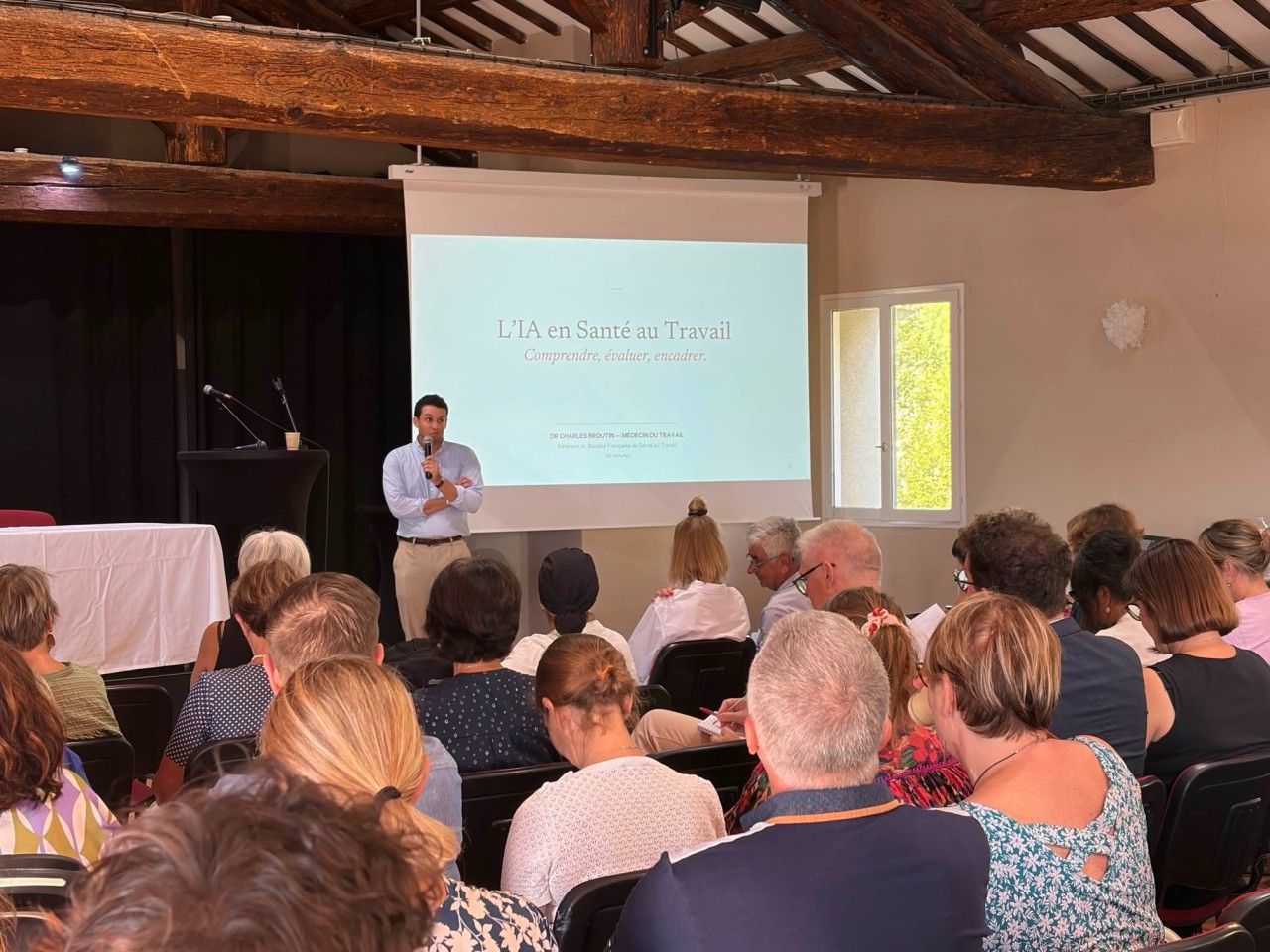
I discussed different models, their capabilities and limitations, frontier models and scaling laws, as well as their possible consequences for the economy and employment.
Identifying and preventing psychosocial risks
I also addressed the psychosocial risks associated with AI at work and what we can do, as occupational health professionals, to identify and prevent them.
Assessing uses in occupational health services
The presentation covered AI uses in occupational health services and how to conduct a pilot before deploying these tools internally, assessing their usefulness and their effects on real work.
The role of occupational health in AI safety
Finally, I discussed AI safety and why I believe occupational health has a role to play in this field.
02
16 January 2026 · ISTNF · Nearly 400 participants
The first Marcel Marchand Day dedicated to artificial intelligence.
Group training
The first Marcel Marchand Day, organised with ISTNF on 16 January 2026.
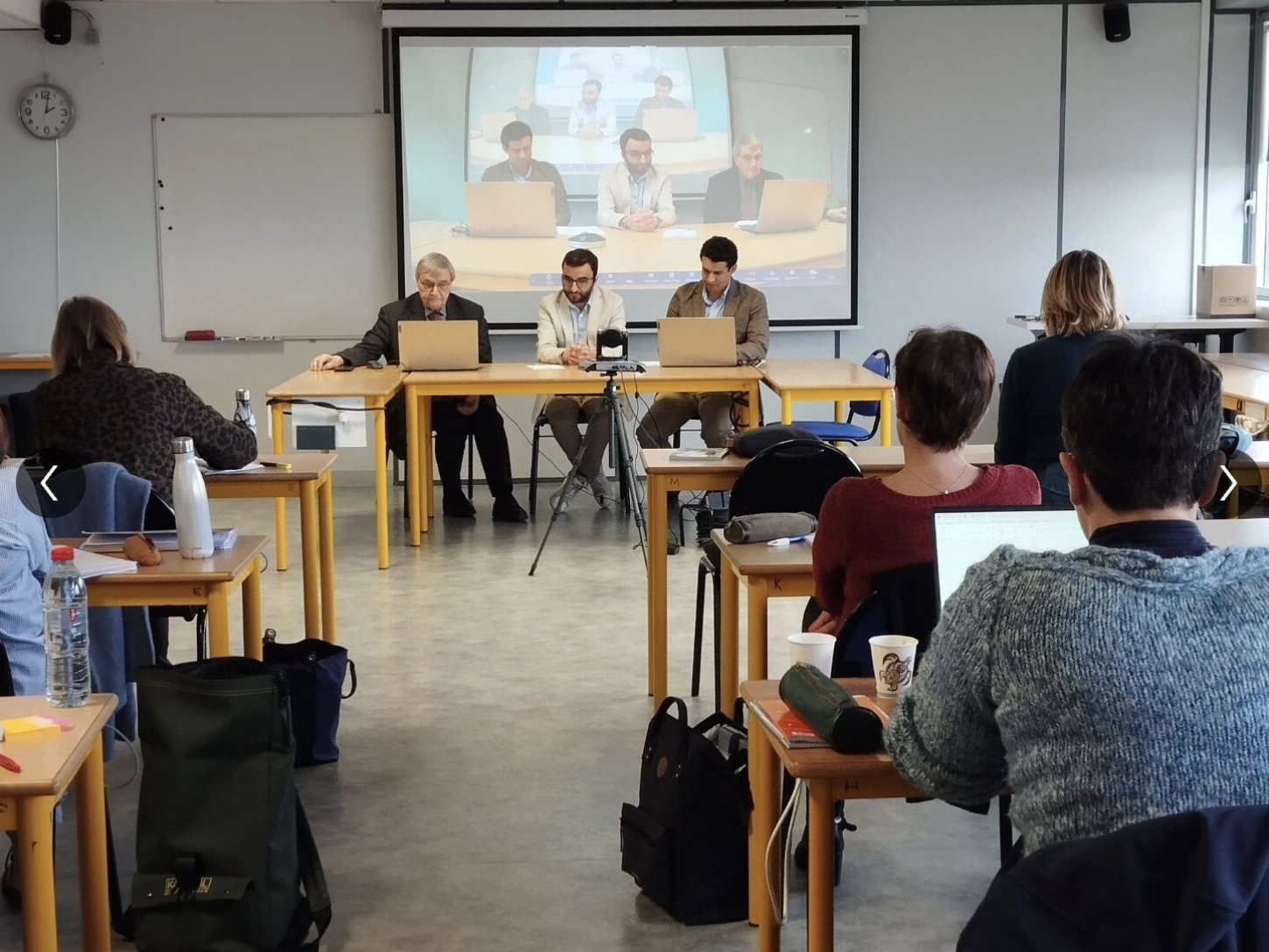
On 16 January 2026, nearly 400 occupational physicians, residents and occupational health nurses attended the first Marcel Marchand Day dedicated to artificial intelligence. I had the honour of co-organising the event with ISTNF, at the initiative of Paul Frimat.
Supporting a major transformation of work
Artificial intelligence is gradually becoming part of the world of work and is expected to profoundly alter its balance in the years ahead. Recent months have already shown that it can have tangible and sometimes troubling consequences for workers: redundancies, rising unemployment in some sectors, changes to the very nature of occupations and transformations in working conditions.
This technological revolution also represents a major opportunity. Used appropriately, AI can become a genuine lever for improvement for employers and workers alike, for example by taking on certain repetitive tasks and allowing people to focus on higher-value activities.
Yet this potential can only be fully realised if these changes are properly supported. Occupational health professionals will have an essential role to play. We need to develop our expertise now so that we can anticipate, assess and prevent the emerging risks associated with these new uses as effectively as possible.
The afternoon programme
An initial opportunity to reflect and share perspectives across five themes.
01
A general introduction to artificial intelligence and language models, presented by Dr Ramy Azzouz, hospital practitioner at Lille University Hospital and coordinator of the university diploma in AI and health.
02
Lessons from practical applications of LLMs in occupational health through the example of RAVAIL – Travail Santé, presented by Dr Quentin Nocture and Pierre Flamant.
03
An analysis of the psychosocial issues associated with the growth of LLMs and their implications for our discipline, which I had the opportunity to present.
04
A presentation on using AI to detect and prevent musculoskeletal disorders, given by Axelle Savadogo, an occupational medicine resident.
05
A broader reflection on the human dimension of this technological revolution, led by Charles Gorintin, co-founder of Alan as well as non-executive co-founder and board member of Mistral AI.
03
21 October 2025 · French Ministry for the Economy and Finance · DGAFP
AI, work and mental health in the French civil service.
Presentation
The use of artificial intelligence in the French civil service.
Panel discussion
Conference “Work and mental health: what challenges for the civil service?”
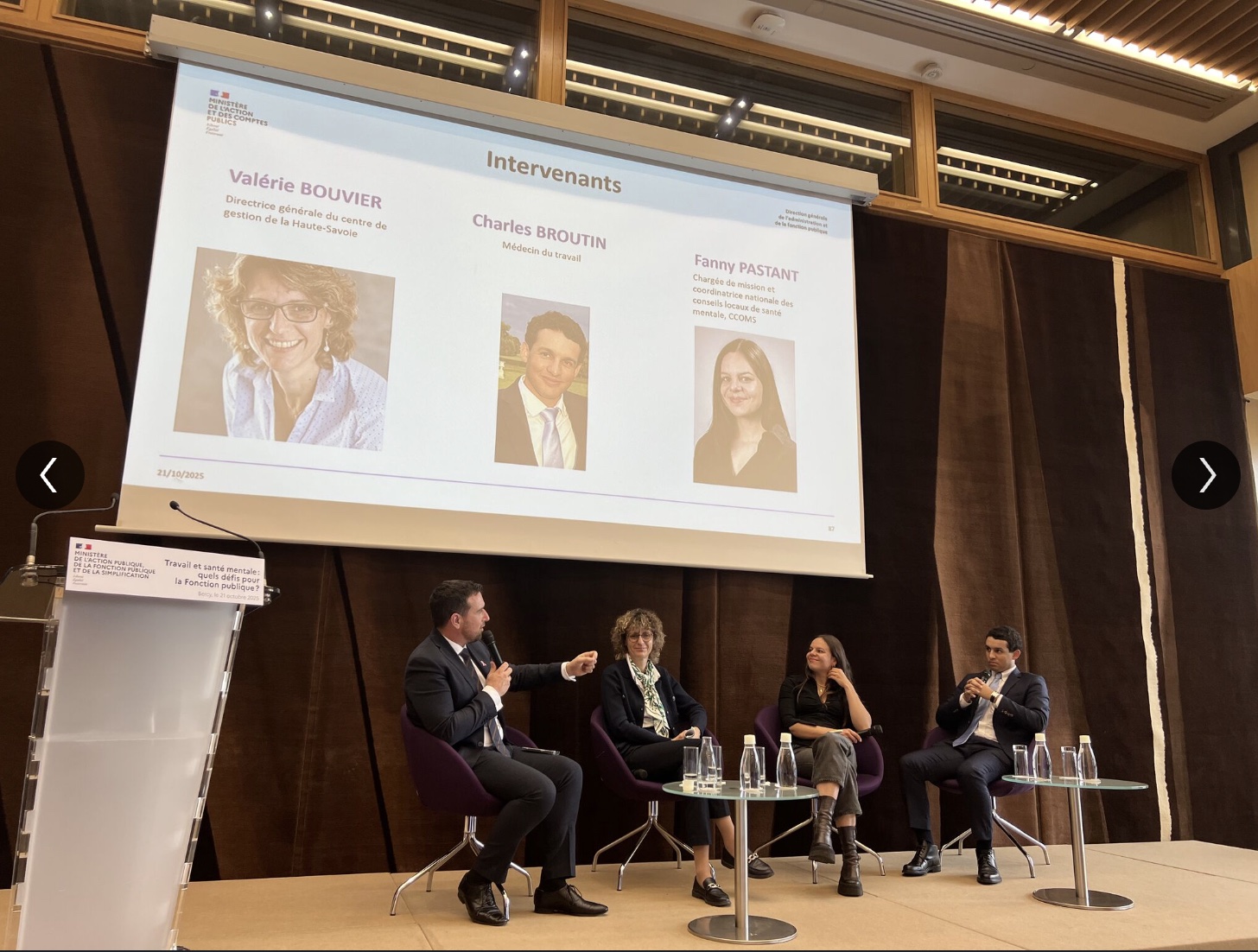
At the invitation of the DGAFP — the French Directorate-General for Administration and the Civil Service — I spoke at the Ministry for the Economy, Finance and Industrial and Digital Sovereignty as part of the conference “Work and mental health: what challenges for the civil service?”, organised for the European Week for Safety and Health at Work.
A collective reflection
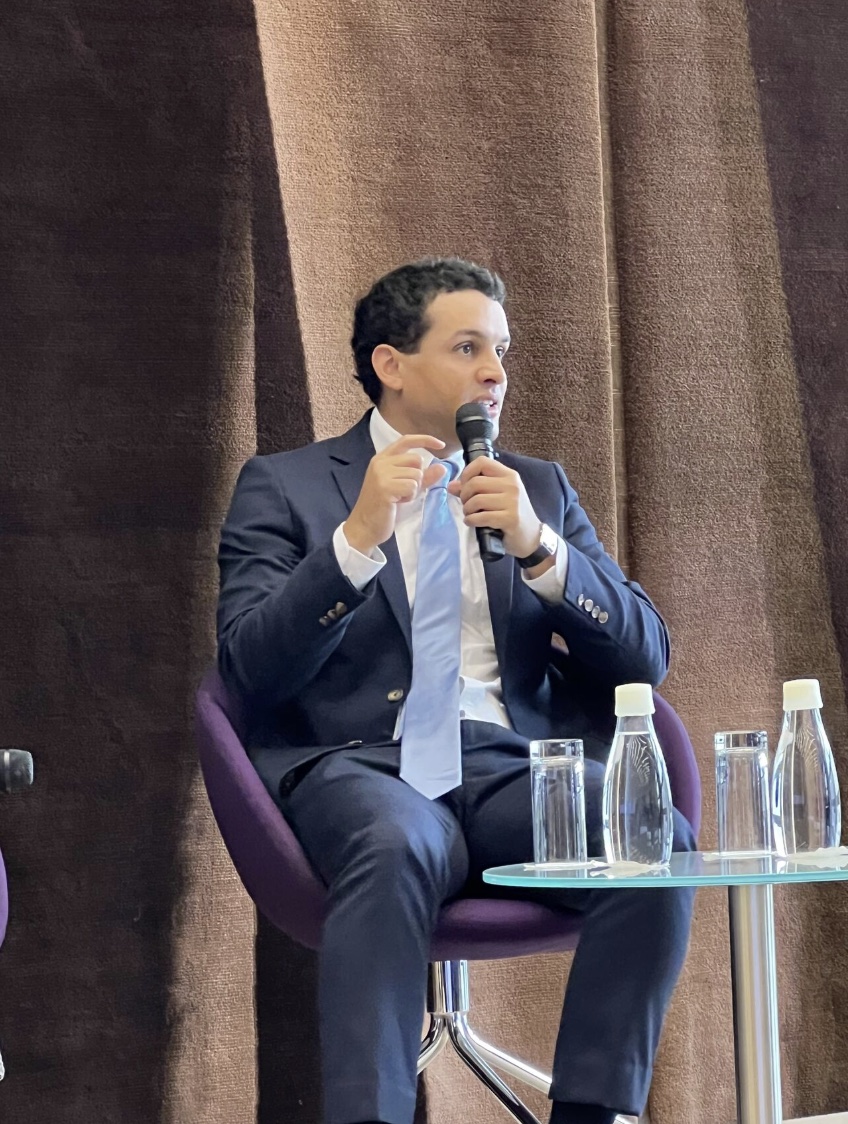
During a panel discussion with Valérie Bouvier and Fanny Pastant, moderated by Fabien Piazzon, I addressed the consequences of using artificial intelligence in the French civil service.
The conditions required for an automation project to provide genuine support for work.
01
A growing number of civil servants will see at least some of their tasks automated by artificial intelligence in the years ahead.
02
This automation can disrupt how work is organised and may even profoundly transform its nature.
03
These changes can contribute to a loss of meaning or autonomy, value conflicts, cognitive overload, hypervigilance or job insecurity: all well-established psychosocial risk factors.
04
For now, artificial intelligence remains a tool. To become genuinely enabling, it must be adapted to people, not the other way round.
05
Automation projects must be co-designed with managers, staff, social partners and occupational prevention and health services.
06
Training and skills development are essential if staff are to understand and take ownership of these new tools.
07
When a project is well designed and automation reflects the needs of the service and its staff, it can become a source of satisfaction and recognition at work. In particular, it can free up time for activities with greater human added value: creativity, decision-making, team cohesion and contact with the public.
08
Given the challenges ahead for mental health and work retention, occupational prevention and health professionals must engage with these issues quickly so that they can advise and support managers and staff as effectively as possible.